whatsapp us
Investing in a custom-designed kitchen is a significant decision for any homeowner. Because a custom space is designed around your specific cooking habits, storage requirements and property dimensions, providing a single, fixed price is challenging. The final figure depends heavily on the materials chosen, the complexity of the design and the condition of the room itself.
Across the region, budgeting effectively requires an understanding of what drives these costs. This guide explores the typical financial commitment required for different sizes of projects and explains the various elements that influence the final price of a custom installation.
Indicative Kitchen Price Ranges
Bespoke kitchen costs vary significantly depending on size, materials, appliances, design complexity, site conditions and installation requirements. The following ranges provide a helpful benchmark for planning your budget.
Small Galley Kitchens (£8,000–£12,000)
Compact spaces require careful planning to maximise efficiency. A smaller Victorian or Edwardian terrace kitchen project typically includes:
- Between 6–8 base units and 4–6 wall units.
- Painted MDF doors or timber veneer finishes.
- Laminate or entry-level solid timber worktops.
- Mid-range appliances.
- Soft-close hinges and drawer runners.
- Storage designed efficiently around the available space.
- These specifications are frequently seen in older terraced properties in Byker, Gateshead, Stockton and parts of Durham.
Medium Kitchens (£15,000–£22,000)
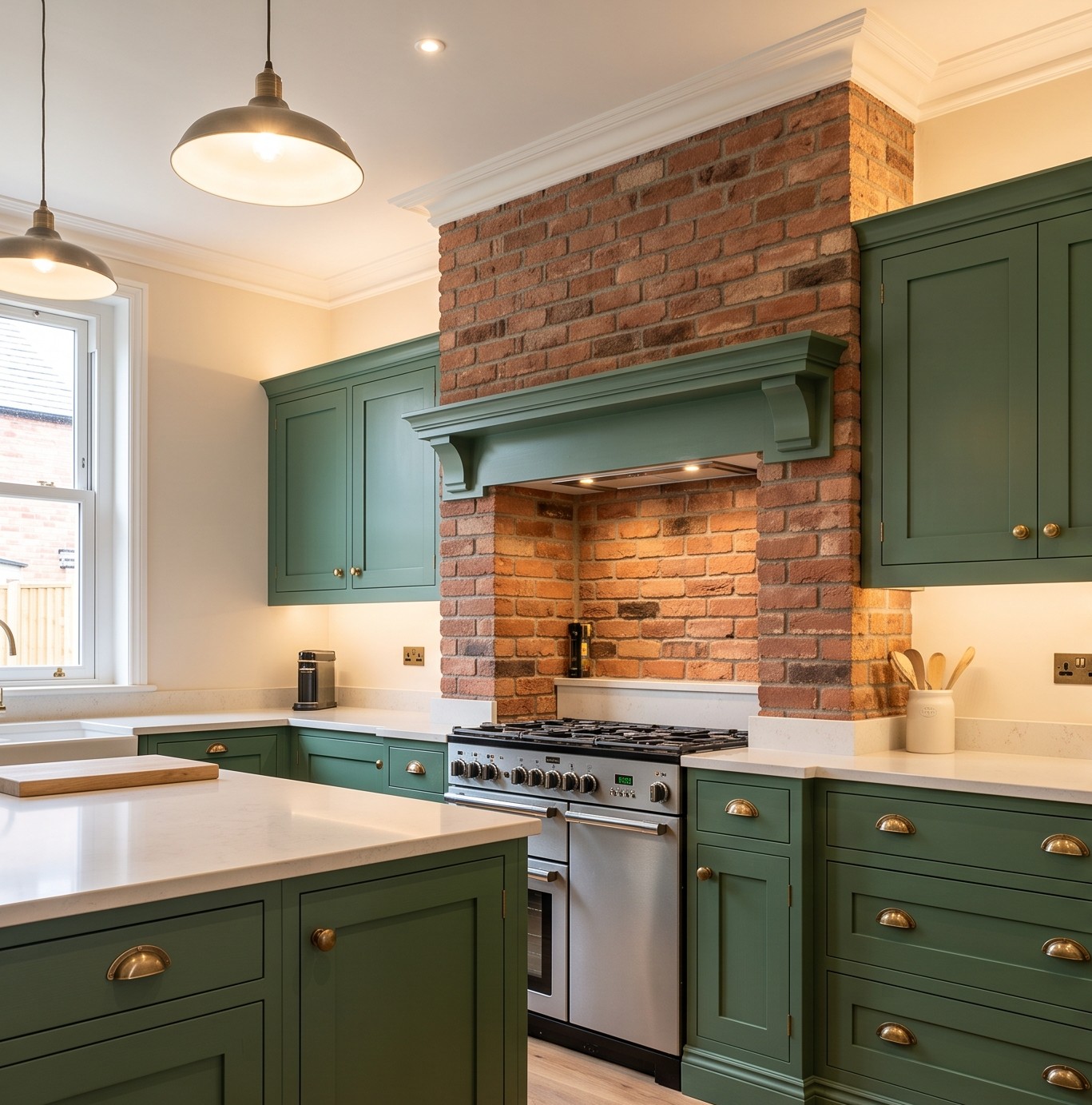
A standard-sized room offers more flexibility for layout options, such as incorporating dining space. A medium-sized kitchen in a 1930s semi or modern terrace might include:
- Approximately 10–12 base units and 6–8 wall units.
- An island or peninsula where the floor plan allows.
- Solid timber doors or a high-quality painted finish.
- Quartz or granite worktops.
- Integrated appliances.
- Full-extension drawers alongside additional storage features.
- This budget bracket is common for properties in Gosforth, Jesmond, Darlington and Washington.
Large Open-Plan Kitchens (£25,000–£35,000+)
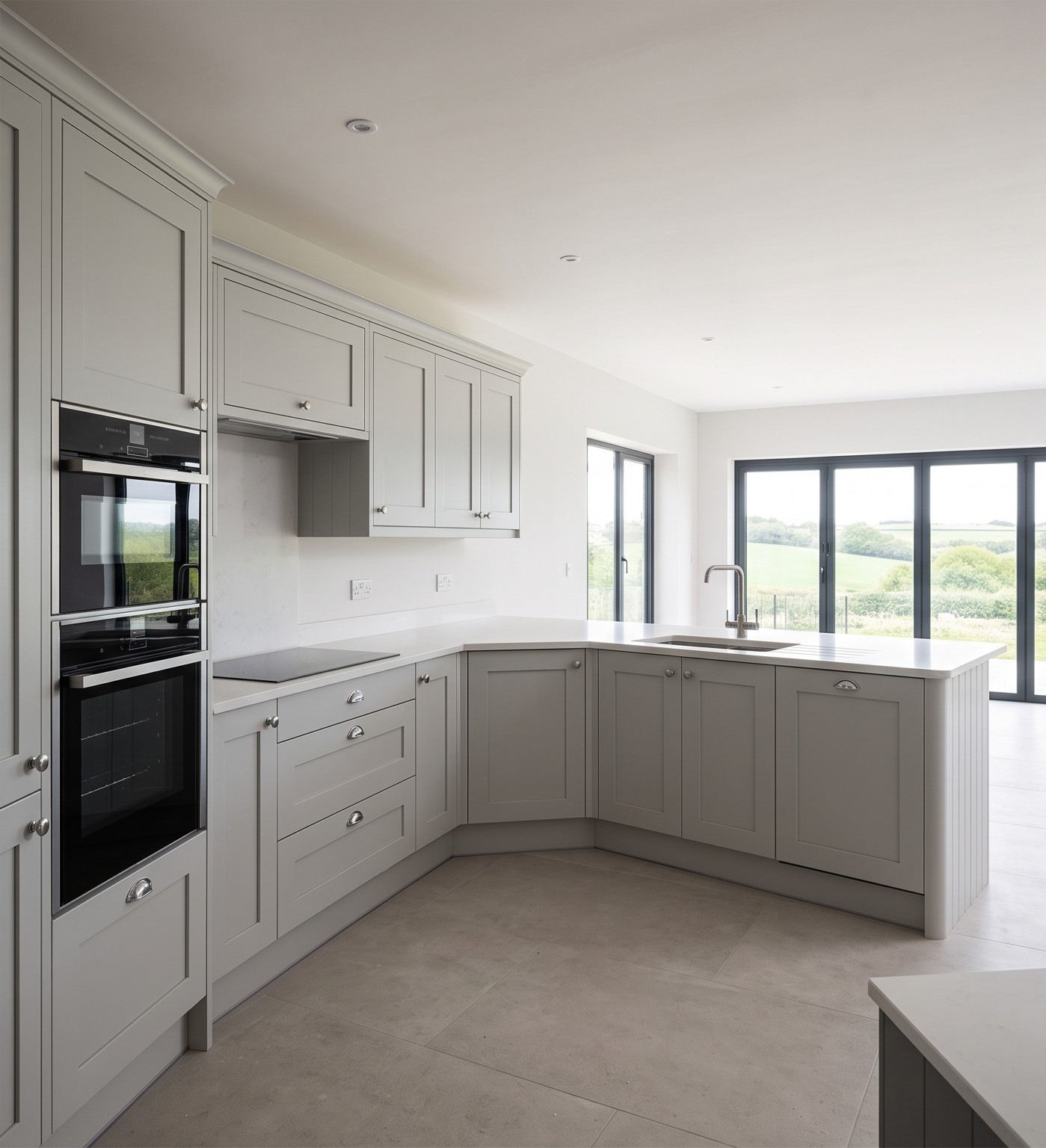
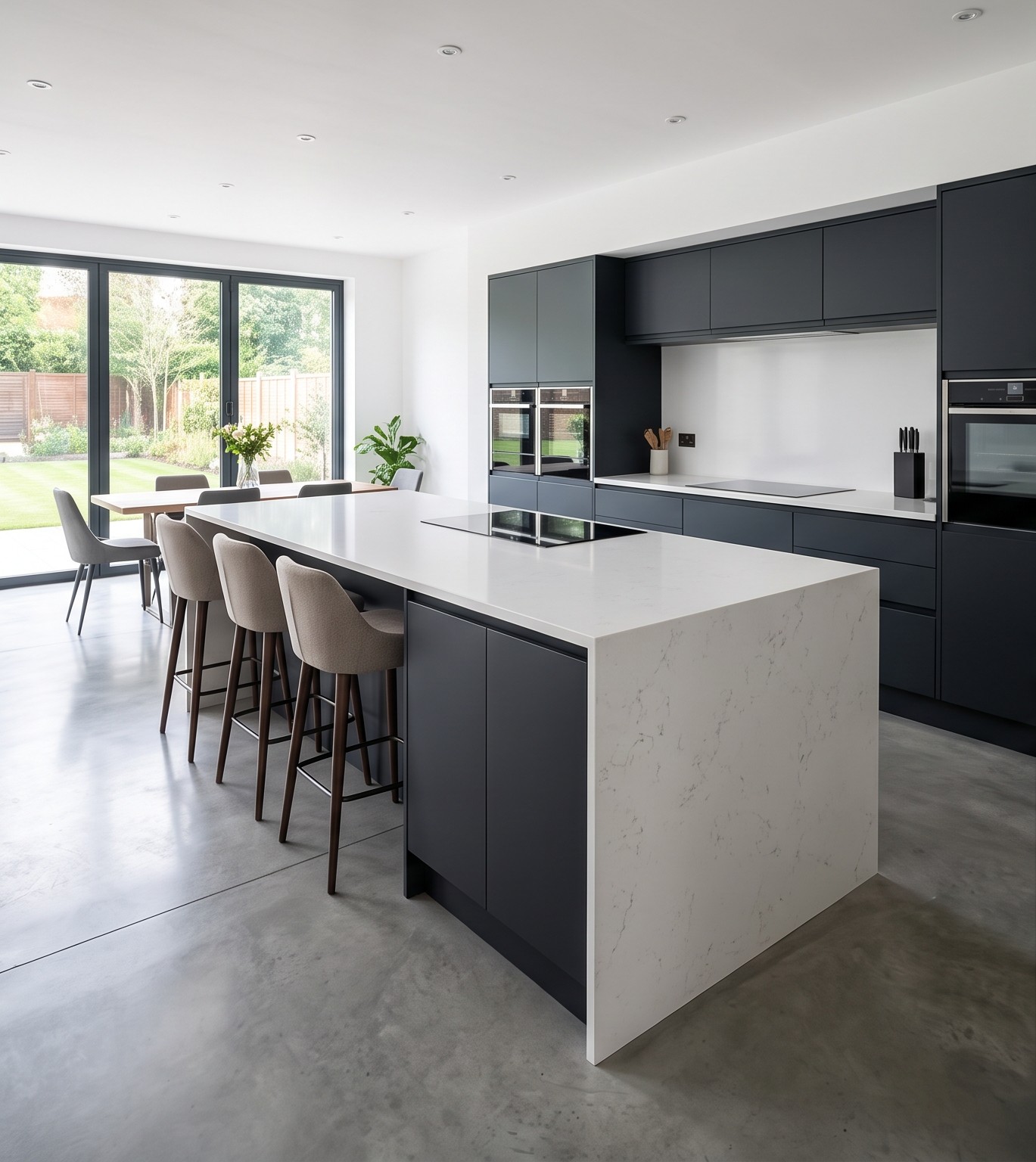
Generous spaces often demand a higher level of specification and more extensive cabinetry to balance the room. A larger open-plan layout may include:
- 15 or more base units.
- A large island with dedicated seating areas.
- Premium timber or advanced painted finishes.
- Premium worktops such as quartz, Dekton or Corian.
- Higher-specification appliances.
- Bespoke storage solutions, integrated bins and specialist lighting configurations.
- These expansive designs are often suitable for larger properties, extensions and barn conversions in locations such as Wynyard, Ponteland and Northumberland.
Key Elements That Drive the Cost
When refining your budget, several specific choices will increase or decrease your final expenditure.
Material and Finish Selections
The choice of door material is a primary cost factor. Solid timber can cost considerably more than painted MDF, depending on the timber species, construction and finish. Furthermore, hand-applied painted finishes may also increase the overall cost compared to standard factory applications.
Worktops and Surfaces
Worktops command a significant portion of the budget. Laminate is generally more affordable than natural stone, quartz and premium solid-surface materials. Beyond the material itself, the installation requirements, edge profiles, cut-outs and joins also influence the final price. Stone and quartz usually require specialist templating after the base units are fitted.
Appliances and Internal Accessories
Appliance costs vary substantially between entry-level, mid-range and premium brands. Integrated appliances and specialist products can quickly increase the overall specification. Additionally, internal cabinet accessories such as pull-out larders, corner storage, integrated bins, plate racks and drawer dividers improve functionality but will add to the overall project cost.
Factoring in Installation and Building Work
The condition of your home directly impacts fitting costs. Working around chimney breasts, uneven walls, difficult access or extensive electrical and plumbing changes can increase labour requirements.
If your renovation involves structural alterations or services upgrades, it is vital to establish the full project scope before committing to the installation. This ensures you can separate essential building costs from design preferences. Remember that uncovering hidden issues during strip-out, such as damp or damaged flooring, may incur additional costs that should be discussed with your fitter.
Secure Payment and Quotations
When managing your budget, always ensure you have a clear understanding of the payment terms. A deposit may be required when the design is approved and materials are ordered, followed by staged payments during manufacture and installation. You should avoid paying the entire project cost upfront unless you fully understand the contractual terms, and always agree the payment schedule in writing before work begins. Be cautious of companies that provide a vague quotation without a detailed specification or request unusually large cash payments without clear documentation.
Conclusion
Understanding the costs involved in a custom kitchen allows you to make informed decisions about where to invest and where to compromise. By carefully balancing material choices, appliance specifications and installation requirements, you can ensure your project delivers lasting value. Thorough planning and clear communication with your fitting team will help keep your project on track and within budget.
Ready to Start Your Kitchen Project?
If you are planning a bespoke kitchen in the North East, explore OPAL LIVING’s bespoke kitchen service to discover our approach to design, craftsmanship and installation. Contact our team to discuss your budget and start bringing your practical, tailored space to life.